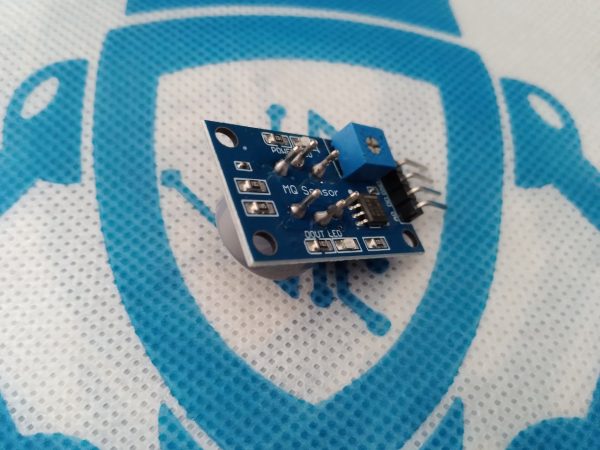
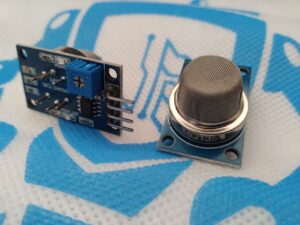
The MQ-7 is a simple-to-use gas sensor for detecting Carbon Monoxide (CO) in the air, commonly used in DIY projects and safety devices with microcontrollers like Arduino to monitor levels from 10 to 1000ppm. It works by changing its electrical resistance with CO concentration, providing an analog output signal that corresponds to the gas level, and features a heater requiring specific high-low voltage cycles (5V for heating, 1.5V for sensing) for accurate readings.�
Standard test circuit: Vc: 5v ±0.1v, Vh(high): 5v ±0.1v, Vh(low): 1.5v ±0.1v
Good sensitivity to Combustible gas in wide range High sensitivity to Natural gas Long life and low cost Simple drive circuit MQ-7 gas sensor has high sensitivity to Carbon Monoxide.
This is a simple to use Carbon Monoxide (CO) sensor, suitable for sensing CO concentrations in the air. The MQ-7 can detect CO-gas concentrations anywhere from 20 to 2000ppm.
This sensor has a high sensitivity and fast response time. The sensor’s output is an analog resistance. The drive circuit is very simple; all you need to do is power the heater coil with 5V, add a load resistance, and connect the output to an ADC.
The main chips: the LM393, the MQ-7 CO sensor
The working voltage: DC 5 V
Dual signal output (analog output, and TTL level output)
The effective signal of TTL output is low level . (when Output low level ,the signal light on.can directly connected to the MCU)
Analog output 0 to 5V voltage, the higher the concentration ,the higher the voltage.
Has a high sensitivity and good selectivity to carbon monoxide .