“ATmega128 Development Board” has been added to your cart. View cart
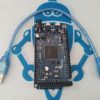
Arduino Due
Br 4,500.00
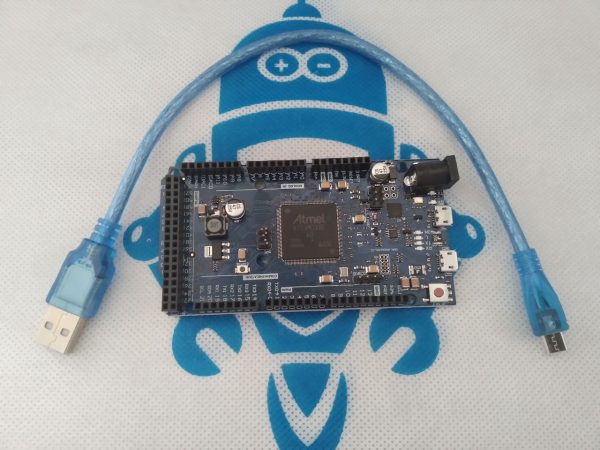
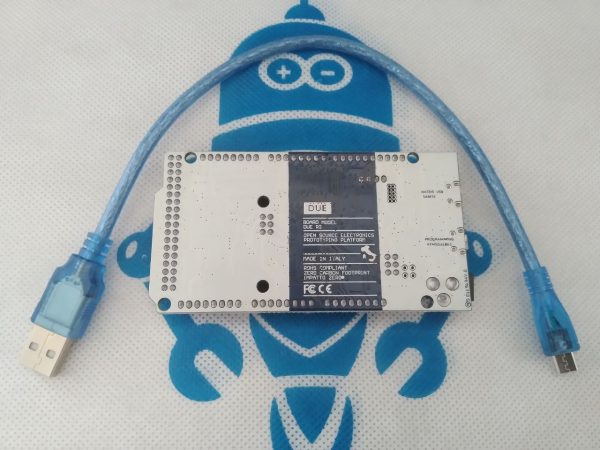
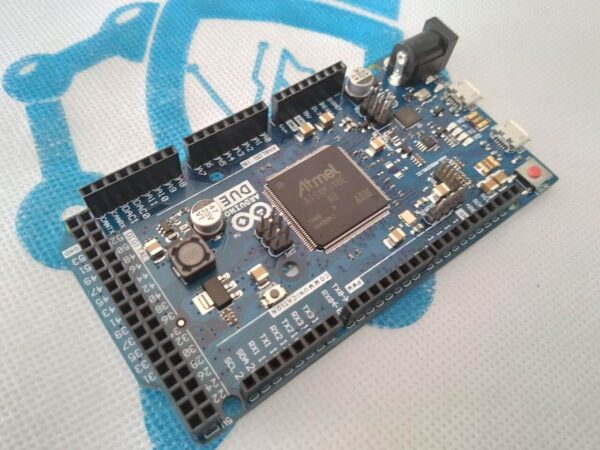
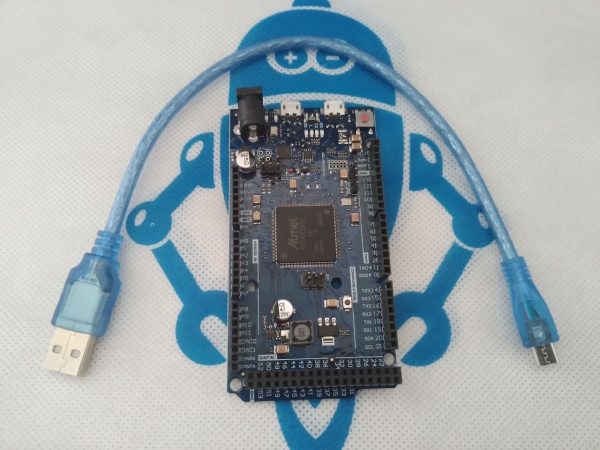
Arduino Due is based on a 32-bit ARM Cortex-M3 microcontroller, featuring an 84 MHz clock speed, 512 KB flash memory, and operation at 3.3V. It shares the large form factor of the Arduino Mega but offers significantly higher processing power and unique hardware peripherals.
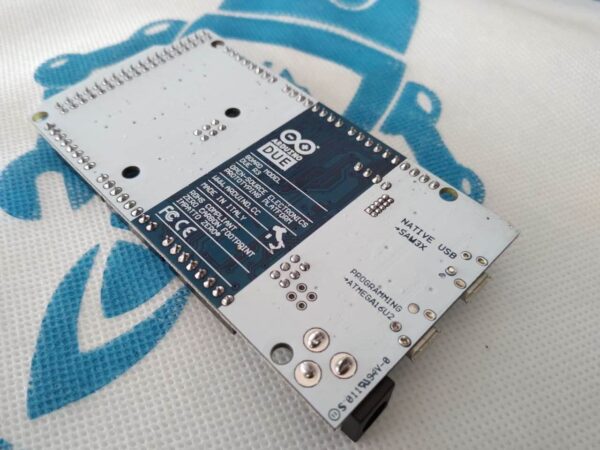
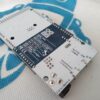
Equipped with two micro-USB connectors—a Programming Port (connected to an ATmega16U2) and a Native Port connected directly to the SAM3X8E. The native USB port allows the board to act as a USB host to connect peripherals like a mouse or keyboard.
Includes 12 analog inputs with upgraded 12-bit resolution (4096 steps) instead of the standard 10-bit resolution
Features two 12-bit Digital-to-Analog Converter (DAC0 and DAC1) pins to generate genuine analog outputs or audio waveforms
Includes hardware support for two Controller Area Network (CAN) communication lines for automotive or industrial networks.
Microcontroller : Atmel SAM3X8E ARM Cortex-M3
CPU : 32-Bit
Digital I/O Pins : 54
PWM Output : 12
Analog Input : 12
Flash Memory (Program Memory) : 512 KB
SRAM : 96 KB (two banks: 64 KB and 32 KB)
Operating Voltage : 3.3V
Input Voltage : 7-12V
Clock frequency : 84MHz
Reset Button : 1
Erase Button : 1
DAC (Digital to Analog Converter) : 2
UART (Serial Communication) : 4
SPI Communication : yes
TWI (I2C Communication) : 2
Arduino Shield Compatibility : Yes (that operate at 3.3V)
It is a microcontroller board based on Atmel SAM3X8E, 32-Bit ARM microcontroller.
Unlike other Arduino boards, the Arduino Due board runs at 3.3V.
The maximum voltage that the I/O pins can tolerate is 3.3V. Providing higher voltages, like 5V to an I/O pin could damage the board !
There are few cases where DUE is chosen over other Arduino Boards:
Case1: Where the system processing is huge. UNO or NANO are boards, which have a maximum clock speed of 16 MHz, so they can perform functions limited to their capabilities. They cannot process high end programs for applications like 3D printer. With 84MHz clock speed more than five times speed of UNO, DUE could do process more data than UNO or NANO.
Case2: Where you need to connect more peripherals. DUE has over 54 I/O pins. So when there are many peripherals in an application using DUE is ideal.
Case3: Where application needs to provide analog output. UNO and NANO cannot provide analog output which is need in some applications. In those cases, DUE will solve the problem.
Case4: With many PWM and ADC outputs, DUE can run application program which cannot be solved by other ARDUINO.
Case5: With CAN interface, DUE can be used on systems with high Electromagnetic Interference where other communications may fail. This facility is not present on other ARDUINO BOARDS.